When Frontier Labs Start Naming Nation States, Legal AI Standards Need to Change
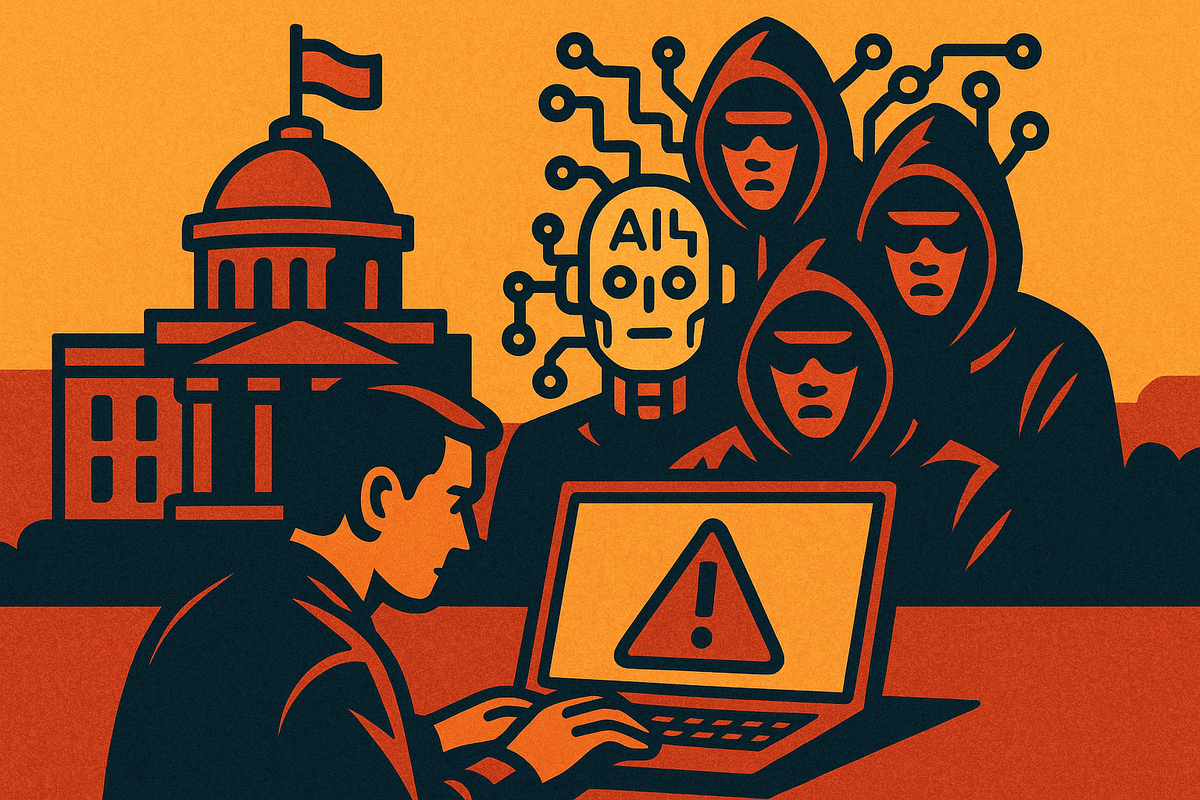
Frontier AI labs do not normally publish long, forensic breakdowns of real cyberattacks, so Anthropic’s new report on GTG-1002 marks a change worth paying attention to in legal. Their team uncovered a state-sponsored group, assessed with high confidence to be Chinese, that used Claude Code as the engine for a coordinated espionage campaign. What was interesting was not just the scale, but the structure. The attackers built an automated system that treated the model as a workforce. The AI handled most of the work across dozens of targets, from scanning internal systems to identifying weaknesses to analysing stolen data, while the human operators stepped in only at key decision points.
The full report makes it clear that this was not an abstract experiment. It was a live operation against major companies and government bodies. The attackers used standard tools and off-the-shelf automation wrapped around a frontier model. They weren’t pushing novel malware. They were pushing scale, speed and persistence, and the AI filled the gaps.
For legal teams this is the moment to accept that the threat landscape around AI has changed. If a state-level group can automate an intrusion to this degree, then any firm sending sensitive client material through a cloud model needs stronger evidence of what went where, who accessed what, and how the system behaved. It raises the standard for what counts as reasonable care when you rely on AI inside high-value matters.
A public glimpse into how much vendors can see
A statement like this shows the lab is monitoring usage in a level of detail many legal teams have not fully appreciated. If they can detect coordinated misuse, then they can certainly detect more routine patterns. That matters for firms that rely heavily on cloud based AI without thinking about the trail they leave.
It changes the starting point for conversations about confidentiality. If the vendor sees everything, the firm needs its own record of what was sent, who accessed it and how the system behaved. Many teams still operate without reliable internal logs, placing trust that prompts disappear into a sealed box and behave predictably. The incident shows that the box is not sealed, and the vendor sees enough to identify hostile actors, which means firms must be ready to evidence their own decisions.
Misuse elsewhere creates liability here
The legal sector sometimes treats AI misuse as a distant concern, something for cyber teams or regulators. The dynamic shifts when a lab identifies state linked probing, showing that models are being pushed and stretched every day. When that happens at scale, the model’s guardrails are also being pressure tested and if they can be encouraged to reveal more than intended in one context, they can be encouraged in another.
This does not mean a foreign actor necessarily cares about your employment matter, but it certainly means the general risk surface is broader than firms assumed. Any weak control in a legal AI workflow becomes an attractive target for someone closer to home. Disgruntled staff, third parties with access to a shared model key or an overly curious engineer. High level testing by hostile actors can expose lower level weaknesses that apply universally.
Procurement needs a more exacting filter
The legal tech market is full of products built on thin abstractions of generic AI APIs. Many are impressive but most give little visibility into how the underlying model behaves. The moment frontier labs signal that misuse is serious and ongoing, those products deserve closer inspection.
The key question is simple. Can the vendor explain how they prevent cross matter leakage. If the answer relies on one global system prompt or one shared model key, the product carries more risk than most buyers realise. If the vendor cannot provide a reconstruction of a past interaction, including prompts and the model version, the product is not suitable for confidential work.
A safer route is to demand the same level of monitoring you would expect for privileged data systems.
- Segmented access.
- Time bound keys.
- Clear version control.
- A record of what was run and why.
Because without all that, the abstraction gets in the way of governance.
Public announcements can unintentionally centralise the threat
A subtle point often missed is how firms talk about their AI partnerships. When a firm publicly announces that it has moved a large slice of its work into a single platform, whether that is Legora, Harvey or anything similar, it does more than signal modernity. It centralises the threat landscape.
Law firms hold information that is more commercially sensitive than almost any other sector. M&A pipelines, restructuring plans, early stage disputes, private equity strategy. A single draft document can move a share price. Consolidating high value work through one external tool turns that tool into a target worth sustained attention.
This does not mean the platforms are unsafe. It means the surrounding risk changes the moment multiple top tier firms gather sensitive material in the same environment. The Claude announcement makes this more visible because it shows that sophisticated actors are already testing the boundaries of frontier systems. A centralised legal AI platform becomes an attractive destination if those actors ever find a way in.
There is also a second order effect. Public declarations make any weakness predictable. If you know a firm relies on one model provider, one configuration and one access pattern, you know exactly where to start probing. This is why internal segmentation, proper audit trails and firm specific controls matter. Without them, you inherit the weakest controls across the entire client base of the platform you use.
None of this argues against using these tools. It argues for using them in a way that acknowledges how valuable your data is and how visible your reliance becomes once it is publicly stated. Good governance does not slow adoption. It protects the space you need to adopt with confidence.
Internal teams need to treat AI access like privileged access
Many in house teams are pushing for rapid adoption, with that tools appear in different departments with little central oversight. The announcement from Anthropic should make teams more cautious about how they structure access. A single shared configuration used across the organisation creates a single point of weakness. Firms need to treat AI usage more like access to a case management system. Individual access, limited roles and a clear line of sight across all interactions.
This is not a burden because it actually frees teams up, once you have proper audit trails and controlled personas, you can move faster with far less risk. You can show auditors, regulators and clients that the system behaves consistently.
Legal teams have historically lagged cyber teams in treating software as something that needed structured oversight and AI has only accelerated this gap. The Claude announcement was not a scandal. It was a warning that the environment is shifting, it also demonstrated that misuse is active, coordinated and analysed at a serious level by the people who run the systems.
Once that becomes public, firms can no longer rely on casual governance. The new baseline is simple, because of you use AI for legal work, you need defensible logs, tested personas, segmented access and a clear way to reconstruct what the AI did. These are not costly measures, they need to become organisational habits.
The firms that make this changed now will be the ones that can adopt more capable models later with confidence. The firms that do not will find themselves unable to prove the most basic things when challenged.