AI native law firms are arriving. The harder part is getting them to connect
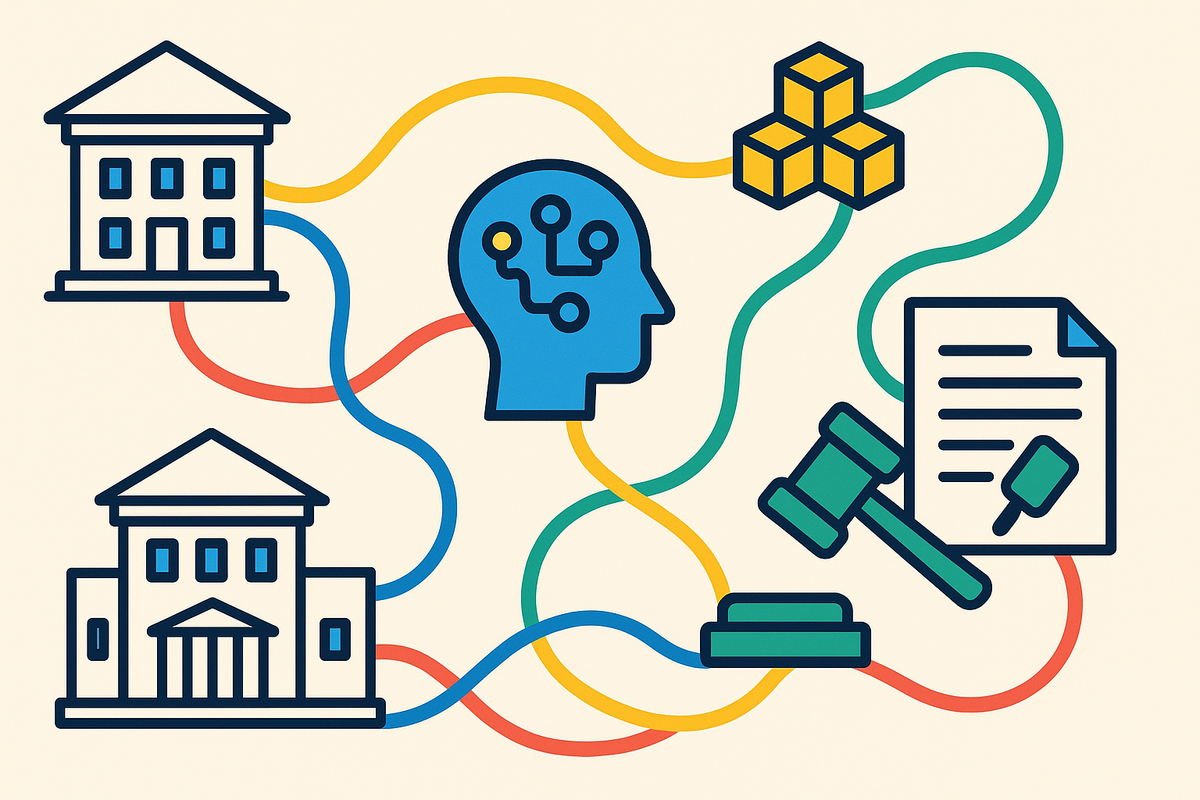
The first wave of AI native law firms is starting to take shape. Garfield is already leaning into that identity. Norm Law presents itself as an AI native firm for institutional clients. Others are forming quietly in the background. These are not traditional firms experimenting with a bit of automation. They are building from a different centre of gravity, with AI woven into their operational fabric rather than added as an accessory.
It is a moment worth paying attention to, although the conversation tends to stop at the novelty of the model. The interesting point though is that being AI native only gets you so far, the real value arrives when these firms begin to behave like API native organisations, where information can move cleanly and where the firm acts as part of a wider network rather than as a sealed unit.
An AI native firm might work quickly and consistently within its own environment, but as soon as it interacts with the wider legal ecosystem, the familiar constraints return. Email chains, rigid portals and duplicated documents slow everything down. A modern engine still falters when the road underneath has not changed.
Why AI native is not enough without an API native ecosystem
Anyone who has worked in legal delivery understands where the workflow breaks. Instructions arrive in several different formats. Providers all expect clients to use their own portals. Matter data gets recreated repeatedly because systems cannot share context. None of this is deliberate. It is the product of decades of tools designed in isolation from each other.
An API native firm can accelerate internal work, but the gains narrow quickly once clients need to convert outputs, rebuild context or stitch those outputs into other platforms. The friction never came from the legal analysis alone. It came from everything wrapped around it.
Fragmentation only works when coordination becomes straightforward
A future made up of small, highly specialised AI native firms has obvious appeal. Each provider focuses deeply on a specific type of legal work and becomes exceptionally good at it.
The complication arrives when a client needs several of these firms on a single matter, the legal market has always balanced expertise with coordination cost, and the rise of large multi-disciplinary firms was partly a reaction to that complexity. If clients need to manage five or ten AI native firms in parallel, the overhead becomes unmanageable unless coordination is almost seamless.
Specialists thrive when they connect neatly into the wider process, not when they create more work.
Legal needs cleaner ways to move
Other industries learned this already. Banking changed once account information became accessible through standard APIs rather than trapped in single portals. Data began to appear wherever users needed it, and an entire ecosystem formed around that shift.
Legal is not there yet. Most of the information that drives legal work is bundled inside documents. Two providers with similar capabilities often cannot exchange anything without dropping back to static files. Even the integrations that exist require a surprising amount of manual checking.
AI native firms will only deliver a fraction of their potential until this changes.
Interoperability only works when the foundations are flexible, traceable and well governed
A data model that can adapt
A firm can describe itself as API first, but that promise collapses if the underlying data model is narrow. Legal work rarely fits into tidy fields. Clients track their own attributes, matters evolve as new information appears and specialist providers often need to attach context that was never anticipated by the original system. If a platform cannot accept additional structure without engineering support, it cannot function inside a connected ecosystem. Flexibility in the model is what makes interoperability meaningful rather than cosmetic.
Clear audit trails across the full chain of contributors
Once several AI native firms contribute to a single outcome, clients need to see how the work moved between systems. Each transformation, classification or judgement call becomes part of the evidential picture. This is not about revealing model internals. It is about maintaining a clean, navigable trail that allows a client to understand where decisions were made and how they influenced the final result. A connected market only works if every step remains visible.
Governance and accountability that travel with the work
As soon as multiple providers feed into a matter, governance boundaries need sharper definition. Clients want to know who is responsible if an automated classification is later shown to be wrong, who supplies the documentation required for regulatory review and how signoff works when part of the work was produced by an external AI system. Without clear accountability that spans the full chain, orchestration becomes a risk rather than an advantage.
A practical scenario for GCs
Let's say you've got a client with a large multi-jurisdictional matter. A main firm is already coordinating things, and the client now wants a specialist AI native provider to handle a narrow but important part of the work.
Most firms will say they integrate, but here's a few questions reveal whether they actually can.
- How do you accept structured instructions from external systems?
- Can we pass additional attributes that sit outside your standard model?
- Can your outputs flow into our existing tools without reformatting?
- How do other specialist firms access your results without routing everything through us?
- What does your audit trail look like when data passes between systems?
- When something goes wrong, how do we trace responsibility across the chain?
These questions are not technical hurdles. They test whether the firm understands its role within a broader workflow.
Data ownership and lock-in
Even an API native system can create difficult dependencies if it reshapes data into a proprietary format or claims ownership over enriched outputs. Clients are increasingly sensitive to this, they'll want to know whether the structured information produced by an AI native firm can move to another provider without losing meaning or context. A clean exit is part of a healthy ecosystem.
A few steps by vendors would hopefully move the market forward quickly:
- Build data models that can flex to accommodate extra context.
- Provide consistent, well permissioned APIs with predictable behaviour.
- Offer event driven integrations so information moves when the work moves.
- Treat collaboration with other firms as a core assumption rather than an edge case.
- Make auditability and responsibility part of the architecture rather than an afterthought.
- Allow clients to extract their structured data cleanly.
A better experience for lawyers as well as clients
Although much of this sounds technical, the benefits show up in human terms. Lawyers spend less time reinterpreting documents. Clients stop chasing version histories. Specialists do not need to rebuild context that already exists elsewhere. Everyone in the chain gains a clearer view of the matter and spends more time on the judgement calls that clients actually value.
Good infrastructure creates better legal work.
The firms that succeed over the next decade will not win because they have the most impressive models.
- They will win because they connect cleanly into the surrounding ecosystem.
- They will fit into client workflows without forcing reinvention at every step.
- They will allow multiple specialists to contribute to a matter without increasing the administrative burden.
AI native is a strong start, though the real transformation arrives when these firms can operate together rather than in isolation.